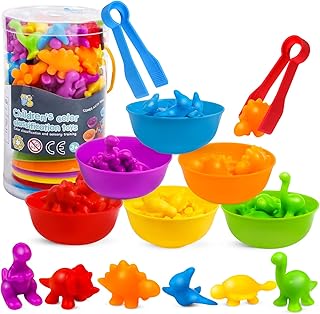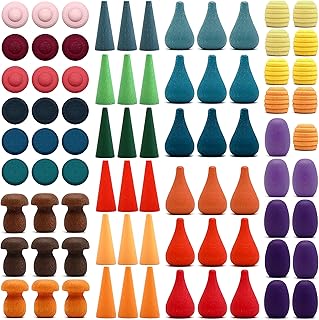

The Reggio Emilia approach values curiosity, creativity, and hands-on exploration—and these principles don’t have to stay in the classroom. Many Reggio-inspired projects can be adapted for home, turning your living space into a rich environment for discovery.
Whether you have an afternoon, a weekend, or a month, the following project ideas invite collaboration, problem-solving, and meaningful learning for the whole family.
1. Nature Collection and Sorting
What You’ll Need: Baskets, trays, or boxes for collecting items; labels or small cards; magnifying glass (optional).
How to Do It:
- Take a walk together and collect natural treasures—leaves, stones, shells, flowers, seed pods.
- Sort them by color, shape, texture, or size.
- Encourage your child to describe what they notice and make connections.
- Display the collection in a “nature corner” at home for continued exploration.
Learning Benefits: Observation skills, classification, vocabulary development, and appreciation for nature.
2. Family Map Making
What You’ll Need: Large paper, markers, crayons, photographs, or printed images.
How to Do It:
- Work together to create a map of your home, street, or neighborhood.
- Include important places like the park, a favorite shop, or a grandparent’s house.
- Add drawings, labels, and even small 3D models made from recycled materials.
Learning Benefits: Spatial awareness, storytelling, literacy skills, and connection to community.
3. Light and Shadow Play
What You’ll Need: Flashlights, lamps, reflective objects, colored cellophane, or paper.
How to Do It:
- Experiment with creating shadows on a wall or floor using hands, toys, and objects.
- Introduce mirrors and translucent materials to change the light effects.
- Encourage children to draw or photograph their favorite shadow shapes.
Learning Benefits: Scientific inquiry, creativity, and understanding cause and effect.
4. Recycled Art Creations
What You’ll Need: Cardboard boxes, bottle caps, fabric scraps, paper rolls, glue, tape, paint.
How to Do It:
- Collect clean, safe recyclables over the week.
- Brainstorm what you could create—a robot, a miniature city, a puppet theater.
- Build and decorate together, making adjustments as new ideas emerge.
Learning Benefits: Creativity, problem-solving, engineering skills, and sustainability awareness.
5. Story Stones
What You’ll Need: Smooth stones, acrylic paint or paint markers, clear varnish (optional).
How to Do It:
- Paint simple images on each stone—a tree, house, person, animal, sun, etc.
- Once dry, use the stones to create and tell stories together.
- Mix and match stones to spark new narratives each time.
Learning Benefits: Imagination, language development, sequencing, and collaborative storytelling.
6. Mini Garden Project
What You’ll Need: Small pots or recycled containers, soil, seeds or seedlings, watering can.
How to Do It:
- Let your child choose what to plant—flowers, herbs, or vegetables.
- Involve them in planting, watering, and observing growth.
- Keep a simple garden journal with drawings and notes on changes over time.
Learning Benefits: Responsibility, patience, observation skills, and connection to the natural world.
Final Thoughts
Reggio-inspired projects at home are about more than just keeping children busy—they are opportunities to build meaningful connections, nurture curiosity, and encourage creative thinking. The beauty of these projects is that they can grow and evolve, just like in a Reggio classroom, adapting to your child’s ideas and discoveries along the way.
By providing time, space, and open-ended materials, you invite your child into a world where learning is active, joyful, and truly their own.