
You’ve done the hard part. You’ve spent weeks, maybe months reading about pedagogy, debating the merits of different educational philosophies, and finally, you’ve landed on the Reggio Emilia approach preschool model. You’re sold on the idea of the “Hundred Languages of Children,” the environment as the third teacher, and the power of project-based learning. But then you start touring schools, and you realize something unsettling: no two “Reggio-inspired” schools look or feel the same.
One school has a dedicated art studio (an atelier) that looks like a professional gallery, while another has a few bins of recycled materials in the corner of a standard classroom. One school talks about “emergent curriculum,” while another seems to have a very set schedule. How do you tell which one is actually living the philosophy and which one is just using the buzzwords? Choosing the right Reggio Emilia Early Childhood education center requires moving past the brochure and looking at the mechanics of the classroom.
How to Choose Between Two Similar Schools
To compare schools effectively, look beyond the equipment and focus on intentionality. Evaluate how teachers document student progress, the flexibility of their daily projects, and whether the physical environment truly invites child-led exploration. A high-quality Reggio Curriculum Preschool will demonstrate a deep respect for the child’s voice through visible, ongoing project work rather than static, pre-planned crafts.
1. The Documentation: Is it a Gallery or a Record?
In a traditional preschool, you might see a “bulletin board” where every child has made the exact same paper plate ladybug. In a high-quality Reggio Emilia approach preschool, you should see documentation. This is the single most important factor to compare when visiting schools.
Documentation isn’t just about showing the finished product; it’s about making the learning process visible. Look at the walls. Do you see photos of children in the middle of a project? Do you see transcriptions of their conversations? For example, if a group of children is interested in how shadows move, a strong Reggio Emilia school will have a display showing their initial drawings of shadows, photos of them measuring shadows at noon versus 3:00 PM, and quotes from the children debating why the shadows “grew.”
The Takeaway: When comparing schools, ask: “Can you show me a recent project and how it evolved over time?” If the teacher can show you a narrative of discovery rather than just a stack of worksheets, you’ve found a school that understands the heart of the curriculum.
“Documentation is not just a record of what happened; it is a tool for research and a way to show children that their ideas are valued and taken seriously by adults.”
— Elena Russo, Early Childhood Pedagogy Consultant
2. The Environment: The “Third Teacher” Test
The Reggio Emilia philosophy famously posits that there are three teachers: the parents, the classroom teacher, and the environment. When comparing Reggio Emilia Schools, pay close attention to the “vibe” of the physical space. Is it cluttered and over-stimulated with primary colors and plastic, or is it intentional and natural?
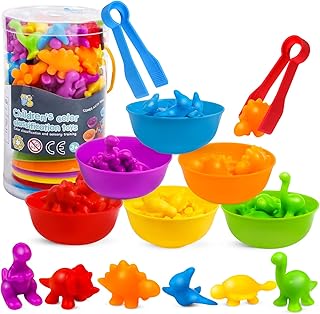
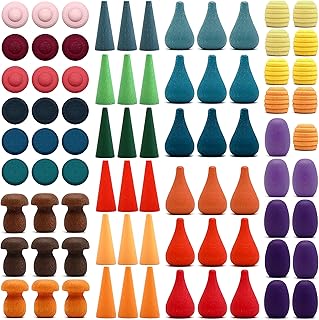
A true Reggio-inspired preschool uses natural light, mirrors, and “loose parts” (like stones, buttons, fabric, and wood) that can be used in multiple ways. Look for an atelier, a dedicated space for creative expression. Is it stocked with high-quality materials like clay, watercolors, and wire, or is it just markers and glue sticks? The quality of the materials tells you how much the school respects the child’s capability.
The Takeaway: Walk into the classroom and wait. Does the room feel like it’s “talking” to the children, inviting them to touch and explore? If the environment feels rigid or overly structured, the curriculum likely is too. For those looking to see what a gold-standard environment looks like, resources at reggioemilia-earlylearningcurriculums provide excellent benchmarks for environmental setup.
3. Comparing Teacher Interaction: Researcher vs. Lecturer
This is where many schools diverge. In some Reggio Curriculum Preschools, the teacher acts as a “guide on the side,” while in others, they still fall back into traditional “sage on the stage” roles. To compare this, you need to observe a live classroom for at least 20 minutes.
Watch how the teacher handles a question. If a child asks, “Why is the sky blue?” Does the teacher give a scientific lecture, or do they ask, “That’s an interesting question, how could we find out?” The latter is the Reggio way. It’s about co-learning. The teacher should be observing and taking notes, acting as a researcher who is trying to understand the child’s thought process.
The Takeaway: Ask the director: “How do teachers decide what the children will learn next week?” If the answer is “We follow a pre-set calendar,” it’s not a true emergent curriculum. If the answer is “We look at the children’s current interests and build projects around them,” you’re looking at a high-fidelity program.
4. School Comparison Table: What to Look For
Use this table to keep track of your visits. A high score in the “Reggio Ideal” column indicates a school that deeply integrates the philosophy into their daily practice.
| Feature | Traditional/Standard Approach | Reggio Emilia Ideal |
| Classroom Decor | Commercial posters, alphabet borders, plastic toys. | Natural light, neutral colors, children’s work-in-progress, mirrors. |
| Art Materials | Coloring books, pre-cut shapes, “craft” kits. | Clay, charcoal, wire, recycled materials, real paint. |
| Project Work | Finished in one day; everyone does the same thing. | Long-term (weeks/months); children work in small groups. |
| Teacher’s Role | Follows a fixed lesson plan; provides answers. | Observes, documents, and asks open-ended questions. |
| Daily Schedule | Rigid time blocks for every activity. | Flexible, allowing for “deep dive” play and exploration. |
5. The Role of the Community and Parents
Reggio Emilia is not just a classroom style; it’s a community philosophy. When comparing Reggio Emilia Early Childhood centers, look at how they involve the family. Is there a “Piazza” (a central meeting space) where parents and teachers can interact? Are there regular meetings where parents are invited to contribute to the project work?
A school that treats parents as “customers” is very different from one that treats them as “partners.” In a true Reggio-inspired preschool, your input as a parent is considered vital to the child’s educational journey. You should feel like you are part of a laboratory of learning, not just dropping your child off at a daycare.
The Takeaway: Ask about the school’s parent communication. Do they send home generic newsletters, or do they share specific “pedagogical narrations” that explain the learning happening in the group? The depth of communication often reflects the depth of the curriculum implementation.
“The best Reggio schools don’t just teach children; they build a culture of curiosity that involves the whole family. If you don’t feel like a partner in the process, the school is missing a key pillar of the philosophy.”
— Dr. Marcus Thorne, Educational Researcher
6. Evaluating Resources and Curriculum Support
Finally, consider the “back end” of the school. Where do they get their inspiration? How do they train their staff? A school that invests in high-quality curriculum resources is a school that values consistency and depth. Many top-tier Reggio Curriculum Preschools utilize structured guides and professional development tools to ensure their teachers aren’t just “winging it.”
can provide the framework necessary to move from “childcare” to “inspired early childhood education.” These resources help bridge the gap between theory and daily classroom practice, ensuring that the “Hundred Languages” are actually being spoken.
Summary of Key Takeaways
- Focus on Process, Not Product: Look for documentation that shows how children think, not just what they made.
- Audit the Environment: Ensure the space is filled with natural light and open-ended materials that act as a “third teacher.”
- Observe the Teachers: Prioritize schools where teachers act as researchers and co-collaborators rather than lecturers.
- Check for Flexibility: A true Reggio approach requires a schedule that can bend to follow a child’s intense interest in a project.
- Community Connection: Choose a school that views you as an essential partner in the educational process.
Frequently Asked Questions
What is the difference between “Reggio Emilia” and “Reggio-Inspired”?
Technically, only schools in the town of Reggio Emilia, Italy, are “Reggio Emilia schools.” Everywhere else in the world, schools use the term “Reggio-inspired” to show they are following the philosophy while adapting it to their local culture and context.
Is a Reggio curriculum good for children with high energy?
Yes. Because the Reggio Emilia approach preschool emphasizes movement, hands-on exploration, and project-based learning, it is often much better for high-energy children than traditional “sit-and-listen” environments.
How do Reggio-inspired students transition to traditional elementary schools?
Research suggests that children from Reggio backgrounds often transition well because they have developed strong problem-solving skills, social collaboration abilities, and a high level of confidence in their own ideas all of which are “soft skills” that lead to academic success later in life.
Does a Reggio school cost more than a traditional preschool?
Not necessarily. While some high-end private schools use the name to justify high tuition, the core of the philosophy relies on “found” materials and recycled items (loose parts). The cost usually reflects the teacher-to-student ratio, which needs to be low enough to allow for deep documentation and observation.
Take the Next Step in Your Journey
Comparing schools is an exercise in intuition and observation. Now that you know what to look for from the documentation on the walls to the way a teacher asks a question you are ready to find the perfect fit for your child. If you want to dive deeper into what a world-class Reggio Curriculum Preschool looks like, or if you’re looking to implement these standards in your own setting, visit reggioemilia-earlylearningcurriculums to explore our comprehensive curriculum guides and resources today.